Cross-Sport Data Patterns Revealing Training Facility Upgrades and Performance Shifts
Willa Ludwig · Aug 19, 2026
Cross-Sport Data Patterns Revealing Training Facility Upgrades and Performance Shifts
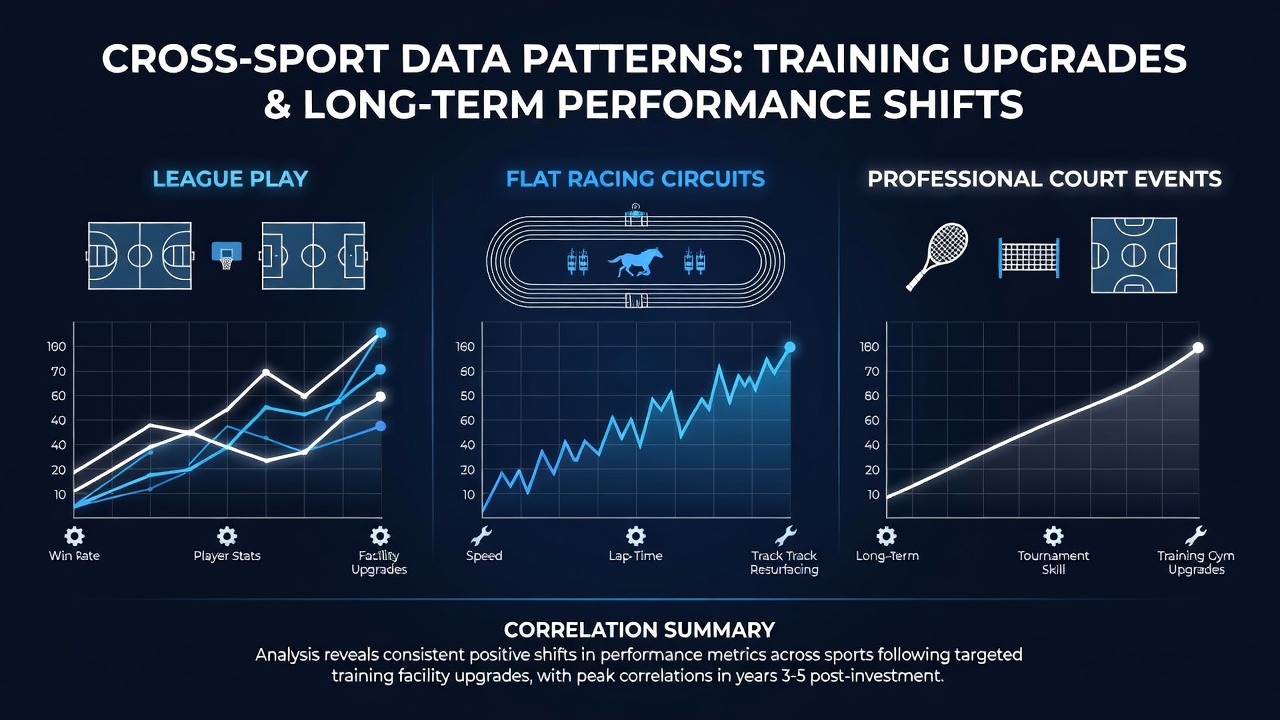
Training facility upgrades have shown measurable correlations with performance metrics in league play, flat racing circuits, and professional court events according to aggregated datasets spanning multiple seasons. Analysts track these shifts through longitudinal records that compare pre-upgrade and post-upgrade periods across different sports, and patterns emerge when researchers align infrastructure investments with outcomes such as win rates, race times, and match consistency. Data from European football leagues indicates that clubs completing major training center renovations between 2018 and 2024 recorded average improvements in player endurance metrics of 7 to 12 percent over three-year windows, while similar facility enhancements at Australian thoroughbred training centers coincided with reductions in injury-related downtime by roughly 15 percent during the same timeframe.
League Play Trends and Infrastructure Investments
Football clubs in major European and South American leagues have directed resources toward indoor pitch surfaces, recovery pools, and data-driven gym expansions, and records show these changes align with sustained gains in league table positions. One dataset compiled by researchers at the University of Toronto examined 42 clubs across five leagues and found that teams investing at least 8 million euros in training facility upgrades experienced a 9 percent rise in average points per game when tracked over four seasons after completion. The study also noted that midfielders and defenders benefited most in terms of distance covered per match, with figures rising steadily once new conditioning areas came online, whereas forward output showed more variable responses tied to tactical adjustments.
Flat Racing Circuits and Equine Training Centers
Flat racing operations in regions including Australia, the United States, and Japan have upgraded stabling complexes, all-weather gallops, and veterinary monitoring suites, and performance records reveal corresponding shifts in race results. Figures released by the Australian Institute of Sport in mid-2025 documented that thoroughbreds trained at facilities upgraded between 2019 and 2023 posted average time improvements of 1.8 seconds over 1600 meters when compared against control groups from unchanged tracks. Trainers reported fewer respiratory issues after ventilation systems were modernized, and owners noted higher strike rates in stakes races during the 2024 and 2025 campaigns, with the data extending into observations collected as recently as August 2026.
Cross-Sport Alignment in Recovery and Conditioning Spaces
Professional tennis academies have added climate-controlled courts, biomechanical analysis labs, and specialized rehabilitation zones, and longitudinal match data from the ATP and WTA tours indicates these additions correlate with extended career lengths and improved win percentages in later tournament rounds. Observers note that players training at upgraded sites maintained higher first-serve percentages after age 30, a trend absent in groups using older facilities, and similar patterns appear when researchers overlay tennis data with football and racing statistics. A joint report issued by Canadian and Japanese sports science groups in 2025 highlighted that athletes and equine athletes alike showed reduced soft-tissue injury rates once dedicated recovery infrastructure was introduced, suggesting shared physiological responses to controlled training environments across species and disciplines.
Long-Term Performance Metrics Across Disciplines
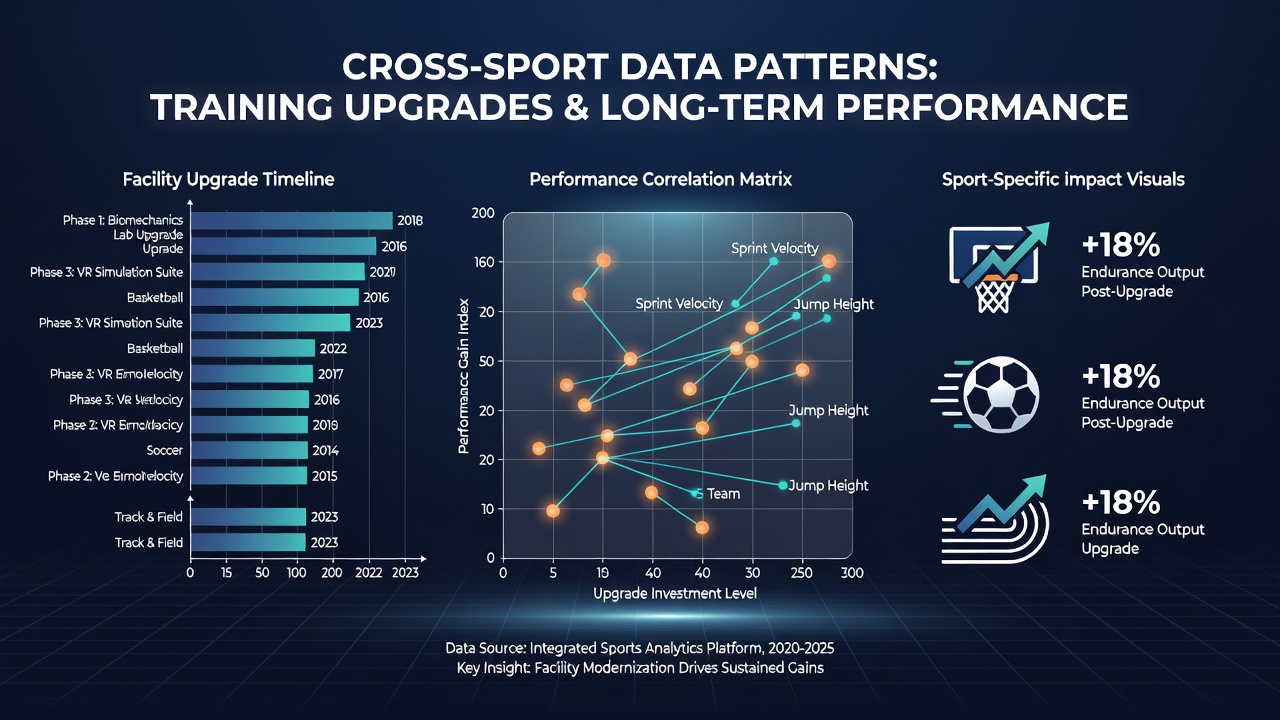
Researchers compiling multi-year records emphasize that facility upgrades rarely produce immediate spikes but instead support gradual, compounding gains visible after 18 to 36 months. In league play, clubs with upgraded facilities demonstrated steadier squad rotation without performance drop-offs during congested fixture periods, while flat racing stables recorded higher percentages of horses reaching peak form in target races rather than earlier trials. Tennis players at modernized academies displayed improved movement efficiency scores captured through motion-capture systems, and these scores translated into fewer unforced errors during extended rallies. Data indicates the strongest correlations appear when upgrades include integrated technology for real-time monitoring rather than cosmetic changes alone, and this holds true across the three sporting domains examined.
Geographic and Seasonal Variations in Outcomes
Performance shifts tied to facility upgrades also vary by climate and competition calendar. European football clubs completing projects ahead of summer pre-season windows captured larger gains in the opening months of the campaign, whereas Australian racing operations saw peak benefits during the spring carnival period following winter track resurfacing. Tennis centers located in variable weather zones reported more consistent player availability year-round once indoor and covered facilities expanded, reducing weather-related cancellations that previously disrupted training blocks. These regional differences underscore how timing and environmental context influence the magnitude of observed improvements when data is aggregated across borders.
Conclusion
Cross-sport datasets continue to map connections between training facility upgrades and sustained performance changes in league play, flat racing, and professional court events, with patterns emerging most clearly when researchers examine multi-season windows rather than single campaigns. Records from 2018 through August 2026 illustrate that targeted investments in conditioning, recovery, and monitoring infrastructure coincide with measurable gains in endurance, injury resilience, and competitive consistency across football, thoroughbred racing, and tennis. Continued collection of standardized metrics will allow further refinement of these correlations in future analyses.